
Rilogrotug
Rilogrotug (AV-380) is an investigational drug and has not yet been approved by any health authorities.
Safety and efficacy have not yet been established.
Rilogrotug (also known by research code AV-380) is an investigational humanized IgG1 antibody that targets growth differentiation factor 15 (GDF-15). The amount of GDF-15 that circulates in the body increases in response to stress. At these higher levels, GDF-15 has been associated with cachexia in patients with cancer.
GDF-15 as a therapeutic target
GDF-15 is a pro-inflammatory cytokine whose elevated circulating levels have been correlated with cachexia in certain types of cancers.
AVEO has initiated an open-label Phase 1b ascending dose study designed to evaluate the safety, pharmacokinetics (PK), pharmacodynamics (PD), and immunogenicity of rilogrotug (AV-380) in cancer patients with cachexia.
AVEO is currently enrolling patients in this study. For more information, go to clinicaltrials.gov.
What Is Cancer Cachexia?
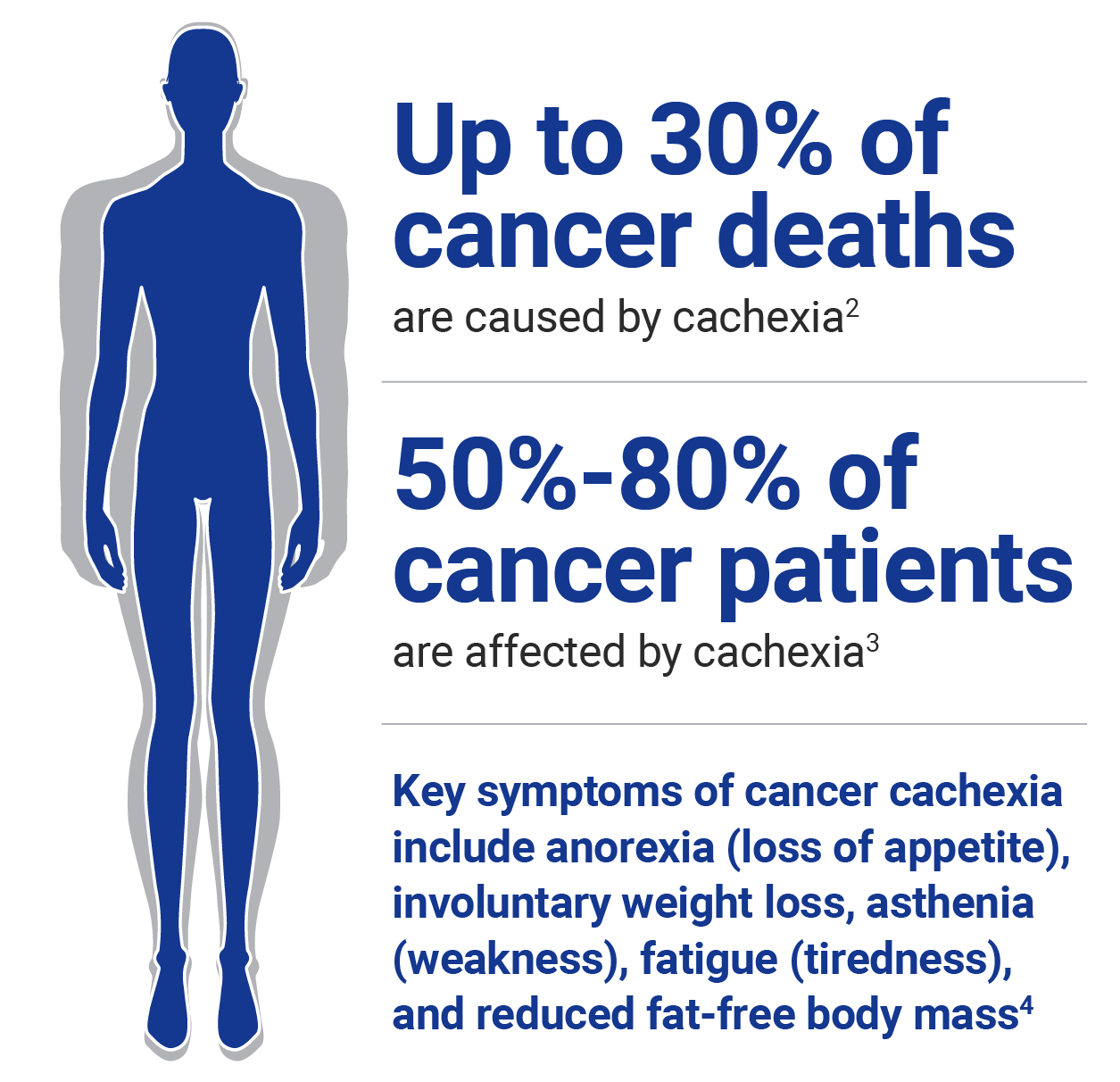
Cachexia is a syndrome caused by multiple factors. Characteristics of cachexia include loss of appetite, and involuntary loss of weight, body fat, and skeletal muscle which leads to fatigue (tiredness), functional impairment (difficulty doing everyday tasks), increased treatment-related toxicity (side effects of treatment), poor quality of life, and reduced survival.1
Who Is at Risk of Developing Cachexia?
Cachexia affects an estimated 50% to 80% of cancer patients and accounts for up to 30% of cancer deaths.2,3 Cachexia incidence varies by tumor type and ranges from >80% (gastric or pancreatic cancer), to ~50% (lung, prostate, or colon cancer), and ~40% (breast cancer and some types of leukemias).4
How Does Cachexia Impact Patients?
Cachexia causes severe unintentional weight loss and muscle wasting. People can feel extremely weak, fatigued, and have no appetite, making it difficult to stay healthy during cancer treatment.5 Cachexia can also take a significant emotional toll on patients and their families, affecting their psychological well-being and quality of life. 5
Cancer Cachexia Diagnosis and Treatment
Cancer cachexia diagnosis includes involuntary weight loss of 5% or more in the preceding 6 months and loss of muscle mass.1 Currently there is no approved treatment, and approaches focus on dietary counseling, increased nutritional and caloric intake, and providing emotional support for patients and their families.1
References: 1. Roeland EJ, Bohlke K, Baracos VE, et al. Management of cancer cachexia: ASCO guideline. J Clin Oncol. 2020;38(21):2438-2453. 2. von Haehling S, Anker SD. Cachexia as a major underestimated and unmet medical need: facts and numbers. J Cachexia Sarcopenia Muscle. 2010;1(1):1-5. 3. Argilés JM, López-Soriano FJ, Stemmler B, Busquets S. Cancer-associated cachexia — understanding the tumour macroenvironment and microenvironment to improve management. Nat Rev Clin Oncol. 2023;20(4):250-264. 4. von Haehling S, Anker SD. Prevalence, incidence and clinical impact of cachexia: facts and numbers update—update 2014. J Cachexia Sarcopenia Muscle. 2014;5(4):261-263. 5. Reid J, McKenna H, Fitzsimons, McCance T. The experience of cancer cachexia: a qualitative study of advanced cancer patients and their family members. Int J Nurs Stud. 2009;46(5):606-616.
Explore published rilogrotug clinical study data
AVEO is conducting a Phase 1b ascending dose study of AV-380 (Anti-GDF15 Monoclonal Antibody) in combination with standard-of-care therapy in cancer patients with cachexia.
In development
As part of our goal to help patients with cancer live better lives, we are seeking to advance other candidates with the potential to positively impact treatment.
AVEO aims to leverage its existing collaborations and partnerships, as well as enter into new strategic collaborations and partnerships to continue to advance each of its product candidates.